
Why I look for the library

When you arrive in Miami or the Hamptons, most people think of beaches, restaurants, or maybe a charming coffee shop that doubles as a souvenir store. I enjoy all of that too. But to be honest, and I have witnesses: I look for books, and not quite the cute little bookshop. More specifically, I look for the public library.
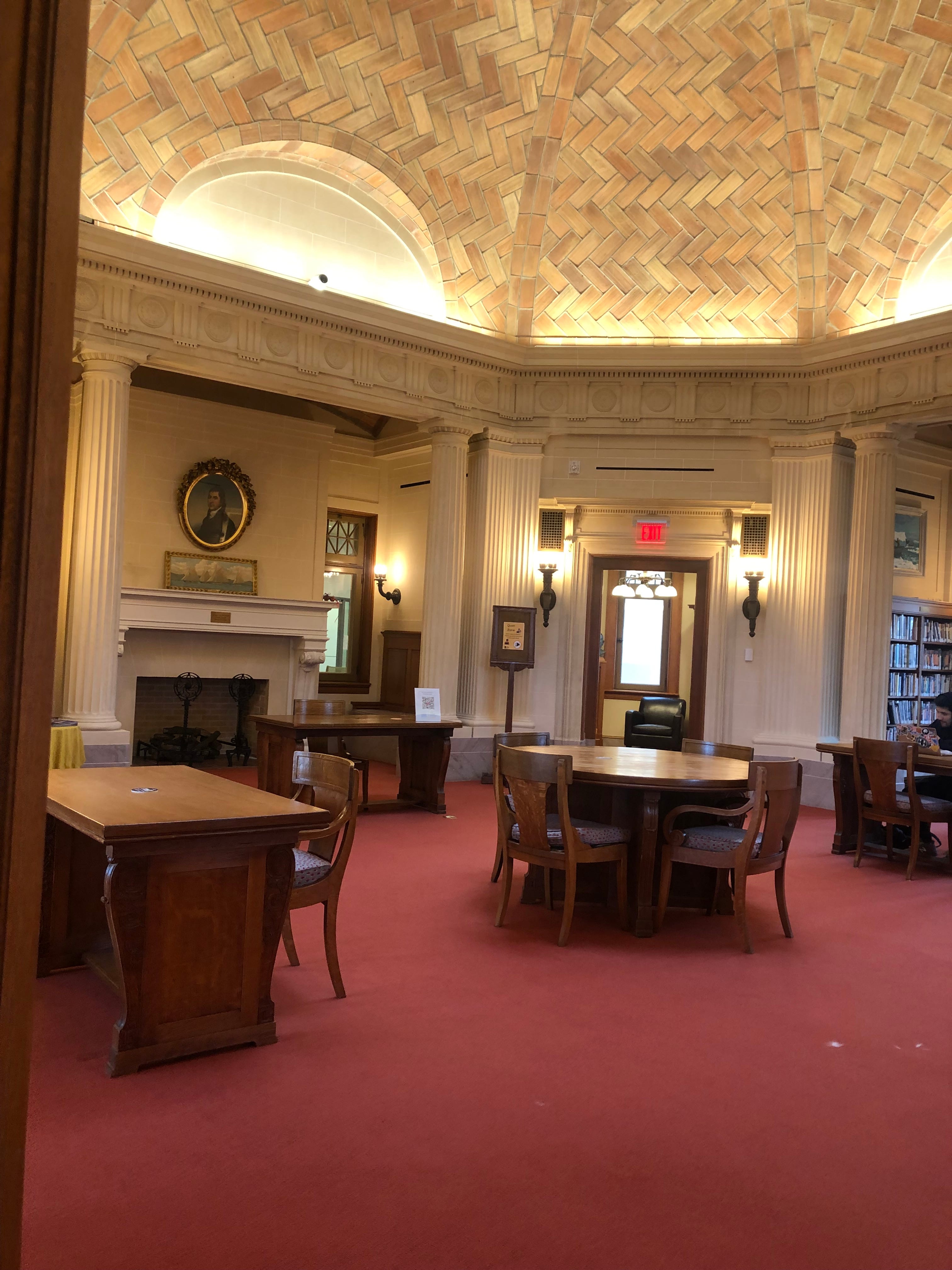
Evidence: photo taken by me at Sag Harbor Public Library, April 2023
Beyond books, I think I’m really looking for public, shared spaces. To the relief of my friends and family, I’m not actually there to sit and read for hours. I’m drawn to the physical space itself, the one that quietly gathers history and reveals the essence of a city. My family finds this habit deeply annoying, and I don’t blame them. Not every library visit is like walking into the New York Public Library at Bryant Park, that magnificent, almost museum-like space. More often than not, a library stop is unremarkable and easily skipped in a tight itinerary. And yet, simply knowing that a place has a public library (and that people actually use it) says something important about it.
Until recently, I hadn’t really questioned why libraries draw me in this way. I’m not a huge fan of museums, to be honest. I often leave overwhelmed and exhausted. But libraries hit me differently. They feel lighter, more alive, more porous.
Everything clicked when I recently read Palaces for the People by Eric Klinenberg. What I had treated as a quirky habit suddenly felt a bit more transcendental. Klinenberg describes libraries as a textbook example of social infrastructure: those physical spaces that sustain communities (because real connections require shared environments). I see this constantly. The first thing I did when I arrived in Brooklyn in 2021, before getting a phone number or a bank account, was getting a library card.
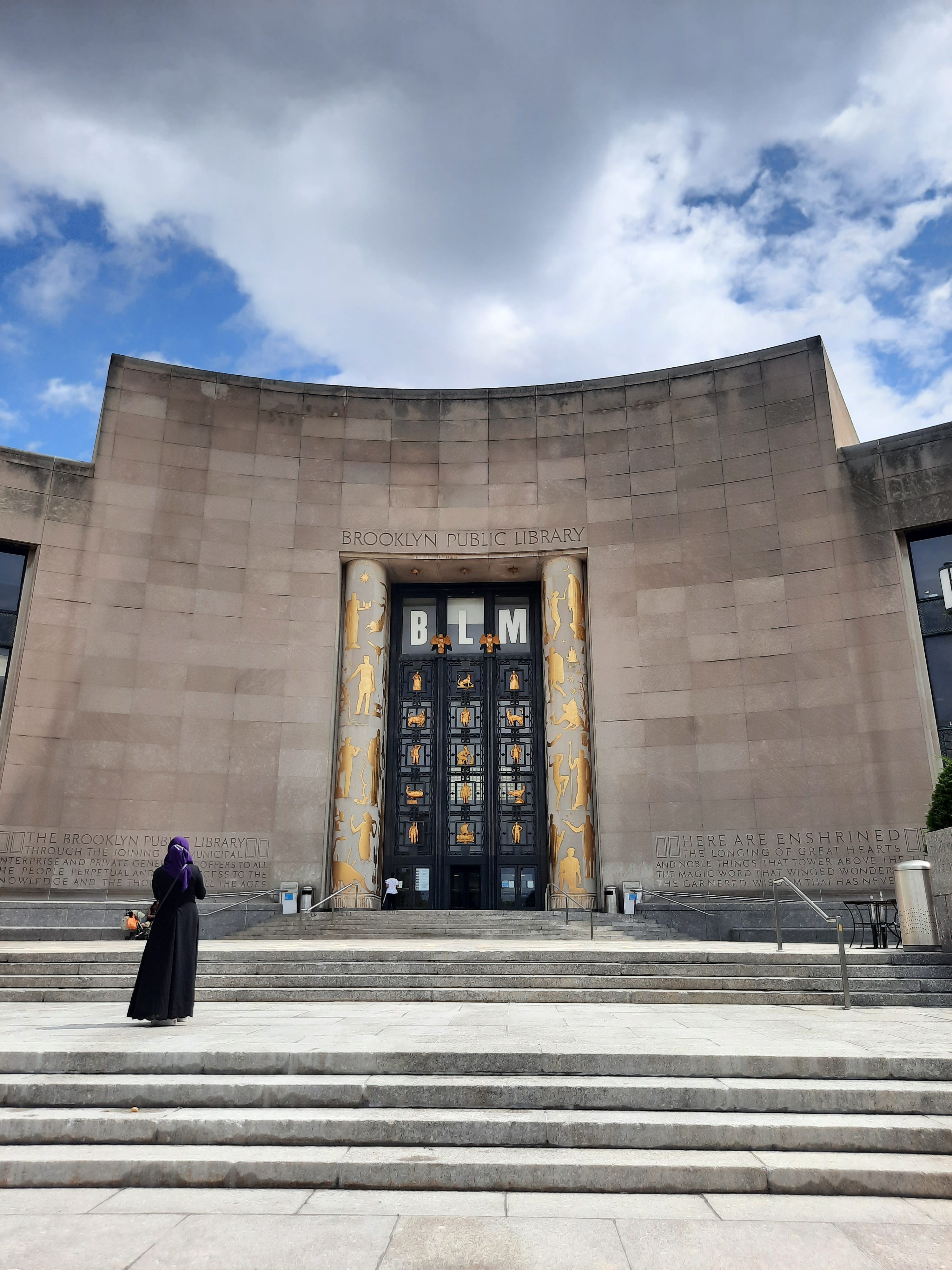
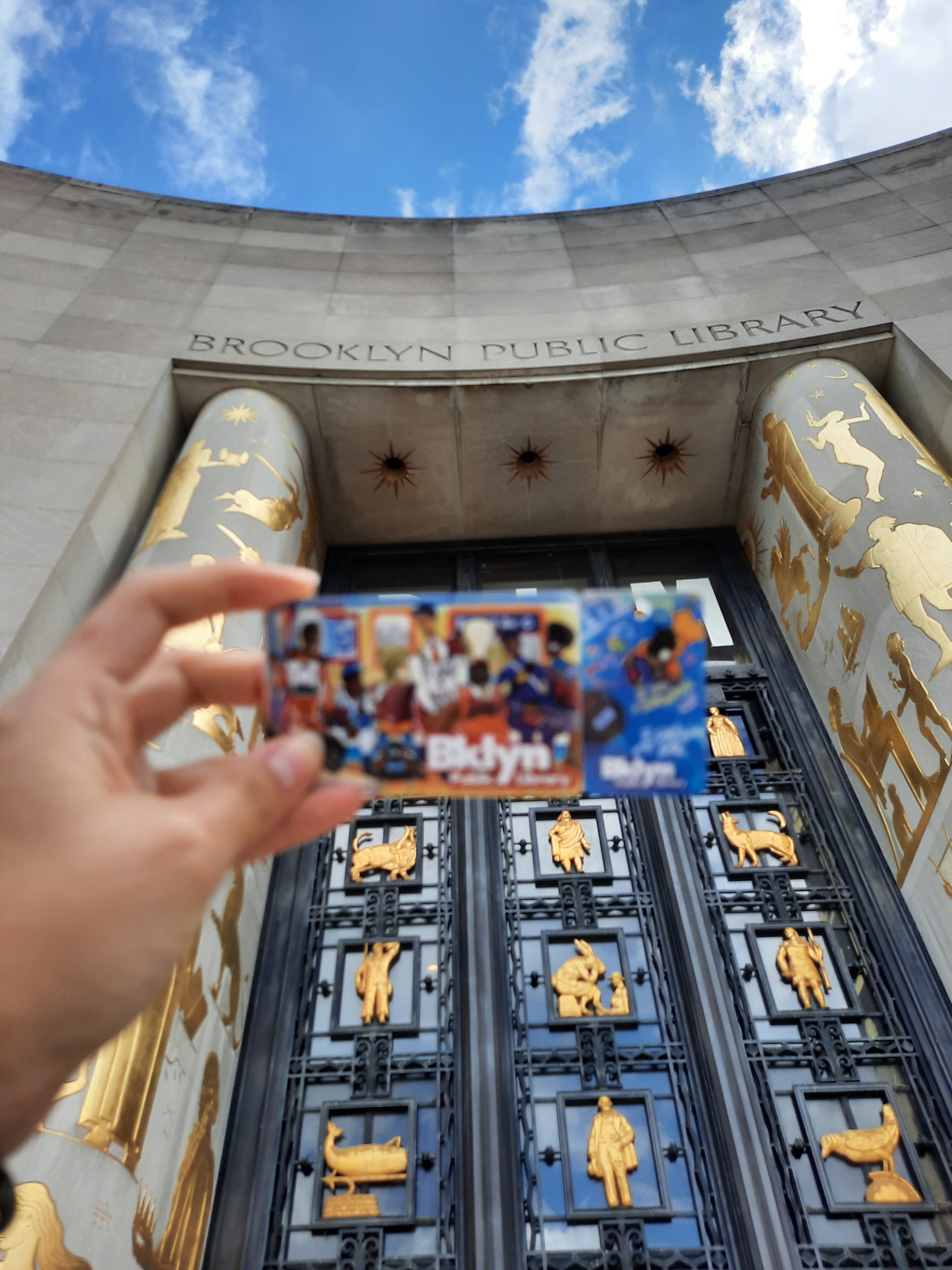
My first photos in Brooklyn, August 2021.
Four and a half years later, I have favorite branches. I know where I go to focus, where I go to people-watch, which seat I want, and how early I need to arrive to get it. To the surprise of many, who don’t usually visit these spaces, libraries are always full. Parents read aloud in children’s sections; people apply for jobs; elderly patrons read newspapers; students of all ages study; others simply rest or escape the heat or cold.
Libraries are profoundly democratic spaces. They rely less on enforcement than on trust, and that trust mostly holds. In New York City, there are no fines for returning books late. Still, every time I place a hold on a borrowed book, it comes back on time. The system works not because it is strict, but because it is trusted.
Historically, libraries have also been crucial for immigrants and newcomers. A recent exhibition at the Bryant Park Library showed how North African and Middle Eastern immigrants found refuge and orientation precisely in the public library. In a city where so much social life is mediated by consumption, libraries remain one of the few places where you are allowed to exist without explanation.
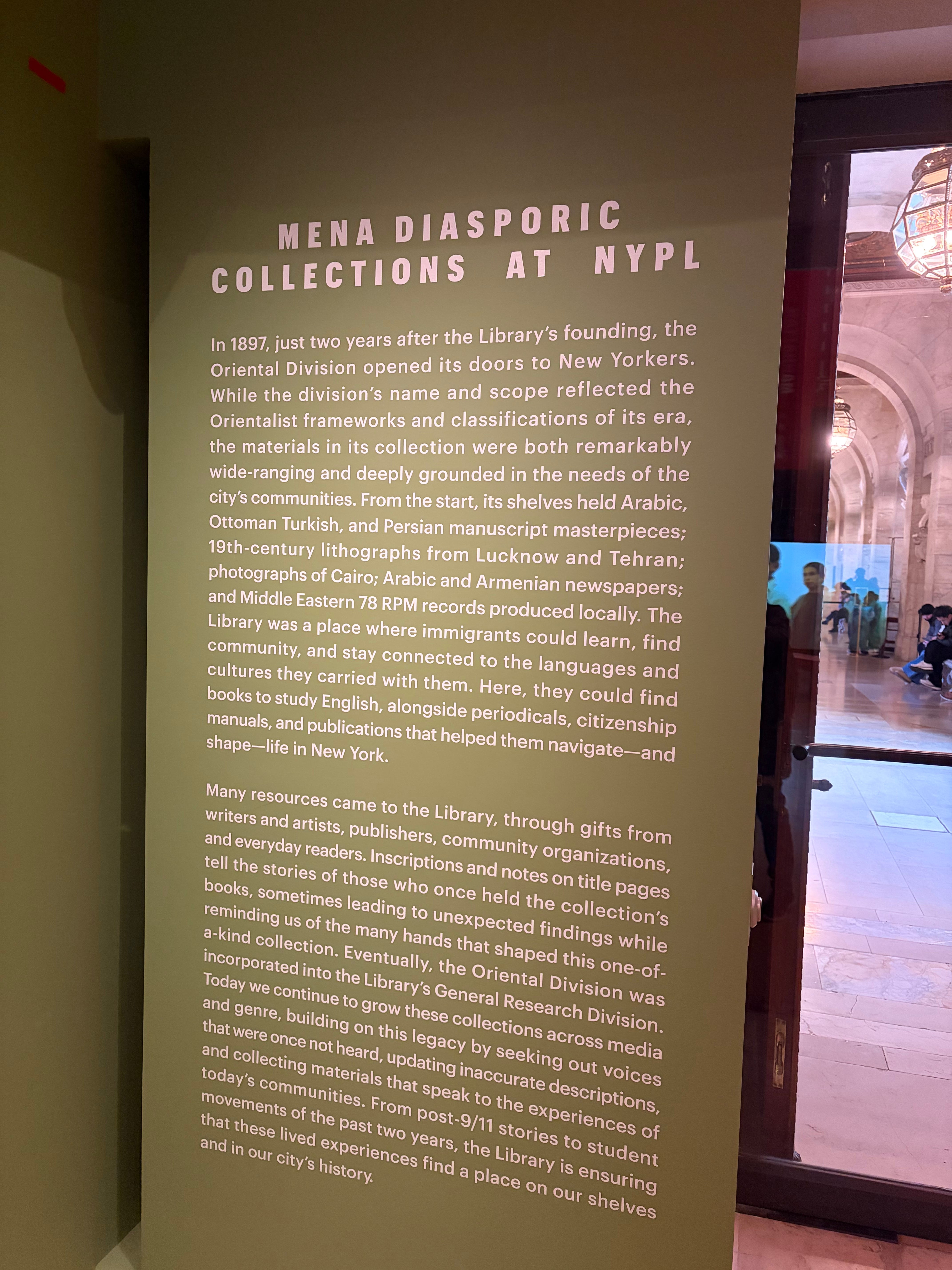
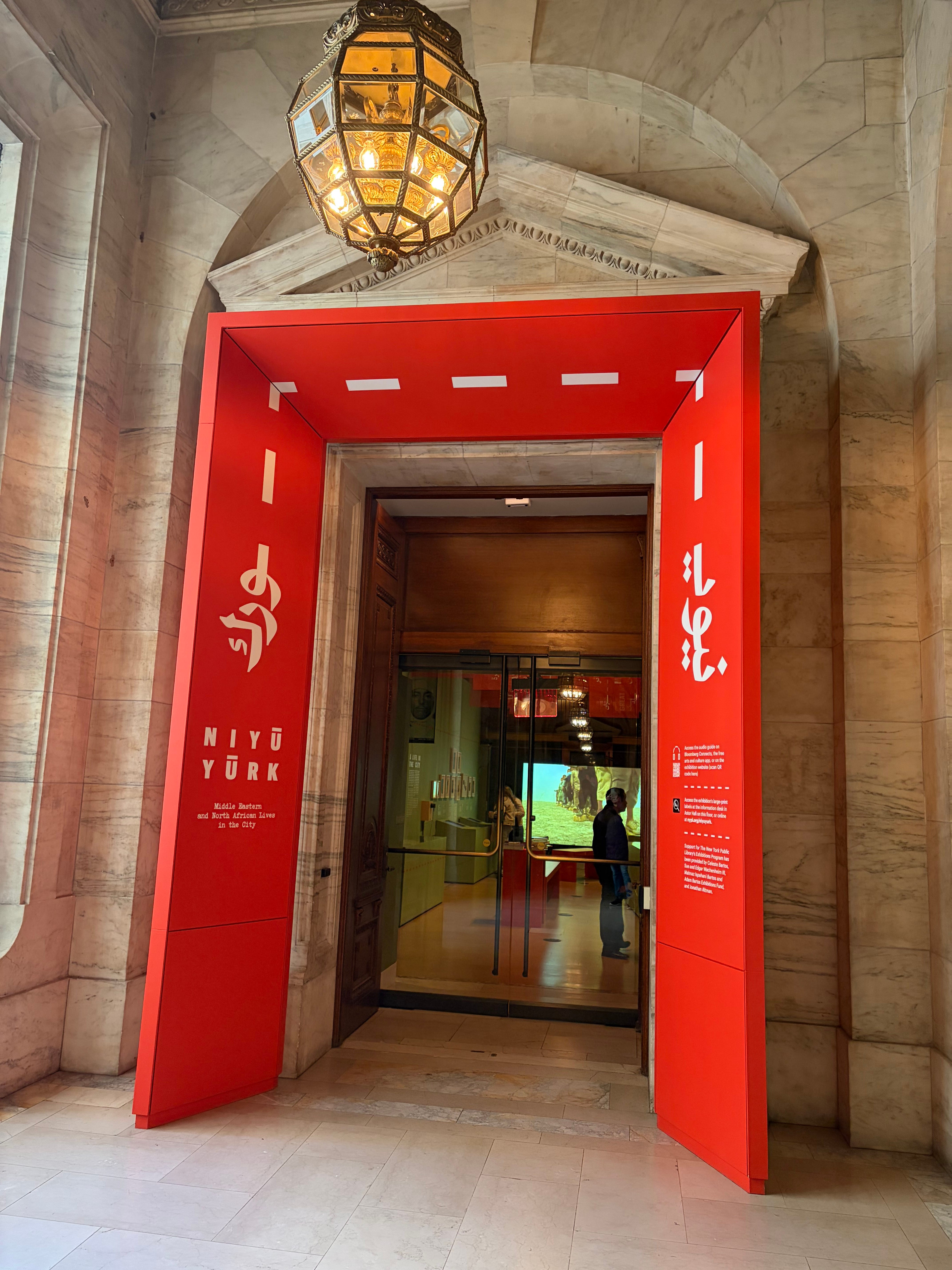
NYPL Exhibition at Bryant Park Library, January 2026
That question of who gets to exist, where, and on what terms, also sits at the center of Fear City by Kim Phillips-Fein (an incredible book for those interested in the history of NYC). The book revisits New York’s fiscal crisis of the 1970s, often remembered as a decade of chaos and failure. But Phillips-Fein tells a more complicated story. Before the crisis, New York operated something close to a local welfare state: CUNY was free for all, museums charged no admission, and transit was expansive and affordable. These were not luxuries, but expressions of a political vision that treated social rights as part of citizenship.
The fiscal crisis was not only about mismanaged budgets, though there was plenty of that. It became a philosophical and ideological battle over what the city was for. Through institutions like the Municipal Assistance Corporation, New York was told it had to be “run like a business.” Balanced budgets became moral documents; social services were reframed as indulgences. CUNY’s free tuition was eliminated not because it saved much money, but because it symbolized a vision that no longer fit.
Budgets, as Phillips-Fein reminds us, are stories about the future. In choosing austerity, New York chose a narrower one. And yet, the city did not go quiet. Art, music, and improvisation persisted because people kept creating even as support systems were dismantled (I love Aretha Franklin - Spanish Harlem).
What feels radical about libraries today is their refusal to accept that everything must justify itself economically. They are remnants of an older idea: that cities are not just engines of growth, but places where common life matters.
I still look for libraries wherever I go because they are evidence that a city has not entirely given up on itself. As long as there are places where people can exist together without needing to earn their presence, a city’s story remains unfinished.
Hi Male, I completely identify with your vision of libraries, not just as a repository for books and documents, but as a space designed for living. This idea dates back to antiquity, and the stories we know of ancient libraries like the Library of Alexandria confirm it. I vividly remember when I was in school, the peace and tranquility I felt when I visited the library. I've always been a frequent visitor to these spaces, and as you say, not just to read a book, but to enjoy their wonderful surroundings and always comforting atmosphere.
Excellent article, congratulations!